Cowboy Character with Lasso Rope Wearing
As a designer who spends more time staring at stitch charts and fabric swatches than sleeping, I have learned to trust my gut before I ever load an embroidery file into the machine. When you are evaluating a new asset for your craft business, it is not just about whether the design looks pretty on a screen. It is about how it behaves under the needle, how it translates to thread, and whether it holds up in the real world of wear and tear.
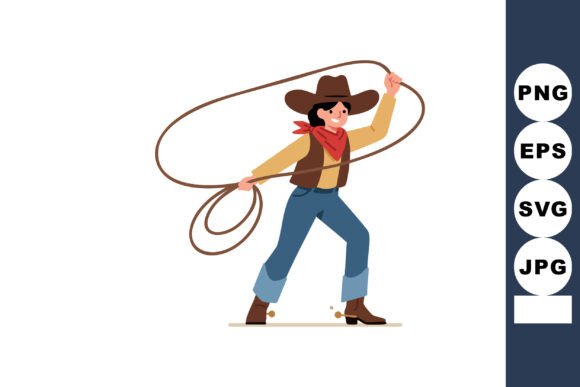
I recently took a close look at the Cowboy Character with Lasso Rope Wearing graphic from the Illustrations category. At first glance, it screams energy. The illustration features a cowboy character skillfully swinging a lasso rope with a confident expression, rendered in vibrant colors and a dynamic posture that suggests a cheerful mood. But does that digital vibrancy survive the transition to physical thread? Let’s break down what this design actually offers for your next embroidery project.
The First Impression: Mood and Visual Personality
The immediate takeaway from Cowboy Character with Lasso Rope Wearing is its kinetic energy. Unlike static portraits or simple icons, this design captures a moment of action. For an embroidery designer, capturing motion is tricky because embroidery is inherently static. However, the sweeping curve of the lasso provides a natural flow that guides the eye across the hoop. This makes it an excellent candidate for larger placements where you want the viewer to engage with the entire composition rather than just a focal point.
The cheerful mood and confident expression give the design a friendly, approachable personality. It avoids the grittier, darker tones often associated with western themes, making it versatile. It feels less like a rugged ranch hand and more like a fun, spirited character. This distinction matters when you are deciding which market to target. It fits perfectly into the realm of playful, family-friendly merchandise rather than serious, heritage-style branding.
Real-World Application: Where This Design Shines
In my experience testing designs for client projects, context is everything. I imagine Cowboy Character with Lasso Rope Wearing performing exceptionally well on specific product categories where its bold lines and dynamic shape can breathe.
- Tote Bag Designs: A canvas tote is one of the most common items for Etsy sellers. The high contrast of a colorful cowboy against neutral canvas allows the thread colors to pop. The lasso’s curve can wrap nicely around the side of the bag or frame the front panel effectively.
- Sweatshirt Embroidery: For fall and winter collections, this design adds a burst of energy to a heavy cotton fleece. The dynamic posture works well on the chest or back yoke, creating a statement piece that feels handmade and unique.
- Baby Embroidery: While "cowboy" might sound tough, the cheerful mood softens it. On baby clothes or nursery decor, it becomes a whimsical theme. The vibrant colors translate well to pastel threads if you adjust the palette, making it suitable for gender-neutral gifts.
- Embroidered Patches: The distinct silhouette of the character and the rope creates a clean outline for a patch. If you are selling patches as accessories for denim jackets or backpacks, this design has strong recognition value.
When thinking about personalized gifts, this design pairs beautifully with names or dates. The open space created by the swinging rope can accommodate text without cluttering the visual field, allowing for a professional handmade product presentation.
Technical Considerations and Stitch Behavior
Before committing to production, any savvy maker knows they must test. The description notes that the downloadable ZIP includes SVG, EPS, JPG, and PNG files. While these are fantastic for printable mockups and digital previews, they do not tell the whole story about stitch density or underlay. You need to verify the actual digitization if you are using a pre-digitized file, or plan your stitching strategy carefully if you are converting vector paths manually.
Here is what to watch out for during the digitizing or stitching phase:
- Stitch Density: The "vibrant colors" mentioned in the description likely rely on solid fills. Ensure the stitch density is appropriate for the fabric. Too dense, and the fabric will pucker; too sparse, and the base material will show through. This is critical for maintaining the crispness of the character’s face.
- Satin vs. Fill Stitches: The outline of the character and the rope will likely use satin stitches. Check that the angle of the satin stitch follows the contour smoothly to avoid jagged edges. The inner details, such as facial features, should use smaller fill or running stitches to maintain clarity.
- Hoop Size Constraints: Because of the dynamic posture, the design may require a wider horizontal span. Confirm the hoop size compatibility early. If the design exceeds standard hoops, you may need multi-hooping, which increases the risk of alignment errors.
Where to Use Caution
No design is universal, and Cowboy Character with Lasso Rope Wearing has specific limitations based on its complexity and aesthetic.
Avoid placing this on small hoop sizes unless you are willing to simplify the detail. Tiny lettering or intricate facial expressions can get lost in the thread if the scale is too small. Similarly, textured fabrics like terry cloth or thick bouclé wool can obscure the fine details of the lasso rope, turning a sharp image into a muddy blob. Thin or stretchy fabrics also pose a challenge; without proper stabilization, the tension of the lasso’s curve could distort the garment.
Furthermore, while the design is cheerful, it may not suit brands aiming for a minimalist or ultra-luxury aesthetic. Its bold nature demands attention, which is great for commercial embroidery aimed at mass appeal but potentially overwhelming for subtle, high-end branding.
Final Verdict for the Creative Entrepreneur
From a practical standpoint, Cowboy Character with Lasso Rope Wearing is a strong asset for makers looking to add personality to their inventory. It bridges the gap between traditional western motifs and modern, playful graphic design. For small shop products, it offers a ready-made focal point that requires minimal additional graphic work.
However, success depends on execution. Always test on scrap fabric first. Inspect the small details under good lighting. Compare light and dark fabric backgrounds to ensure your thread colors provide enough contrast. And most importantly, check licensing terms. Whether you are creating a finished product for sale or using it in design assets for clients, understanding the commercial rights is non-negotiable.
If you are an Etsy seller or a digital product seller, this design’s versatility across apparel, home decor, and accessories makes it a valuable addition to your library. Just remember that the magic happens in the stitching, not just the screen. Treat it with the respect due a professional machine embroidery design, and it will reward you with a finished product that customers love.